
Industries
5 articles
 Industries
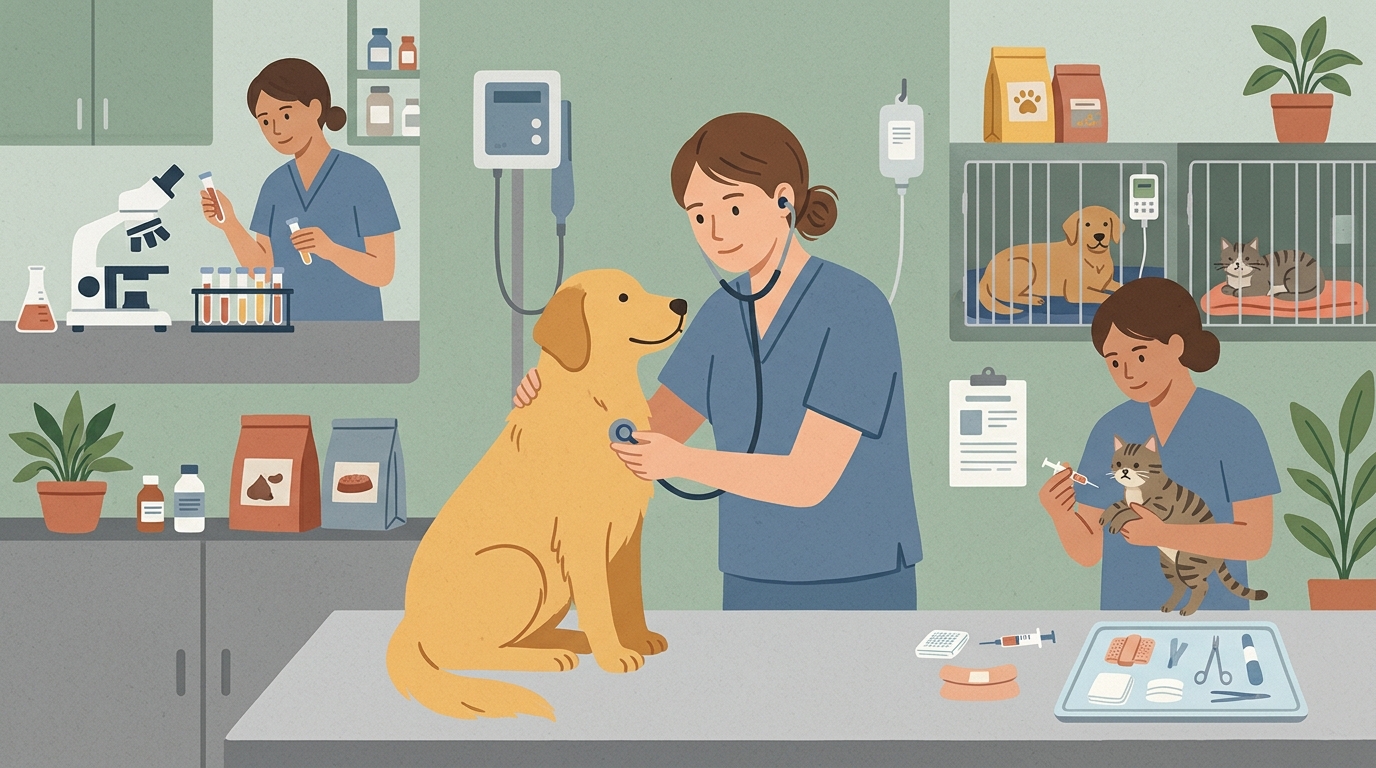
Working as a Veterinary Technician: What the Job Really Involves
A veterinary technician is the credentialed nurse of the animal clinic: you restrain patients for exams, induce and monitor anesthesia, run blood counts and urinalyses, take x-rays, give medications and vaccines, and keep the case record straight (U.S. Bureau of Labor Statistics, 2025). In the United States the usual entry qualification is a two-year associate's degree from an accredited veterinary technology program, followed by a credentialing exam and a state credential (U.S. Bureau of Labor Statistics, 2025).
10 min read
 Industries
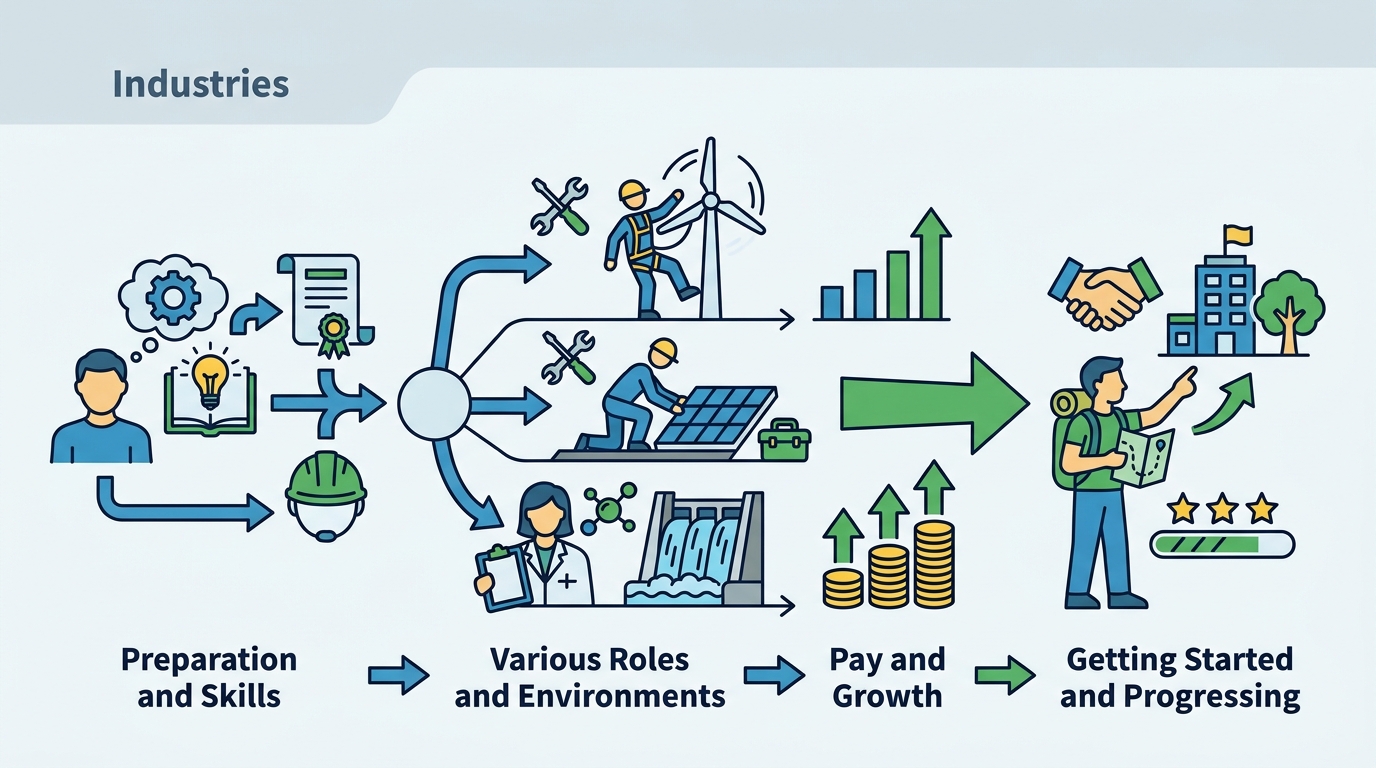
Working in Renewable Energy: Roles, Pay and How to Get In
Renewable energy is not one job market but several: wind, solar, hydro, bioenergy, storage and the grid work that connects them. Most hiring sits in two places — site technicians who install, commission and maintain equipment, and engineers, analysts and project staff who design, consent and finance it.
11 min read
 Industries
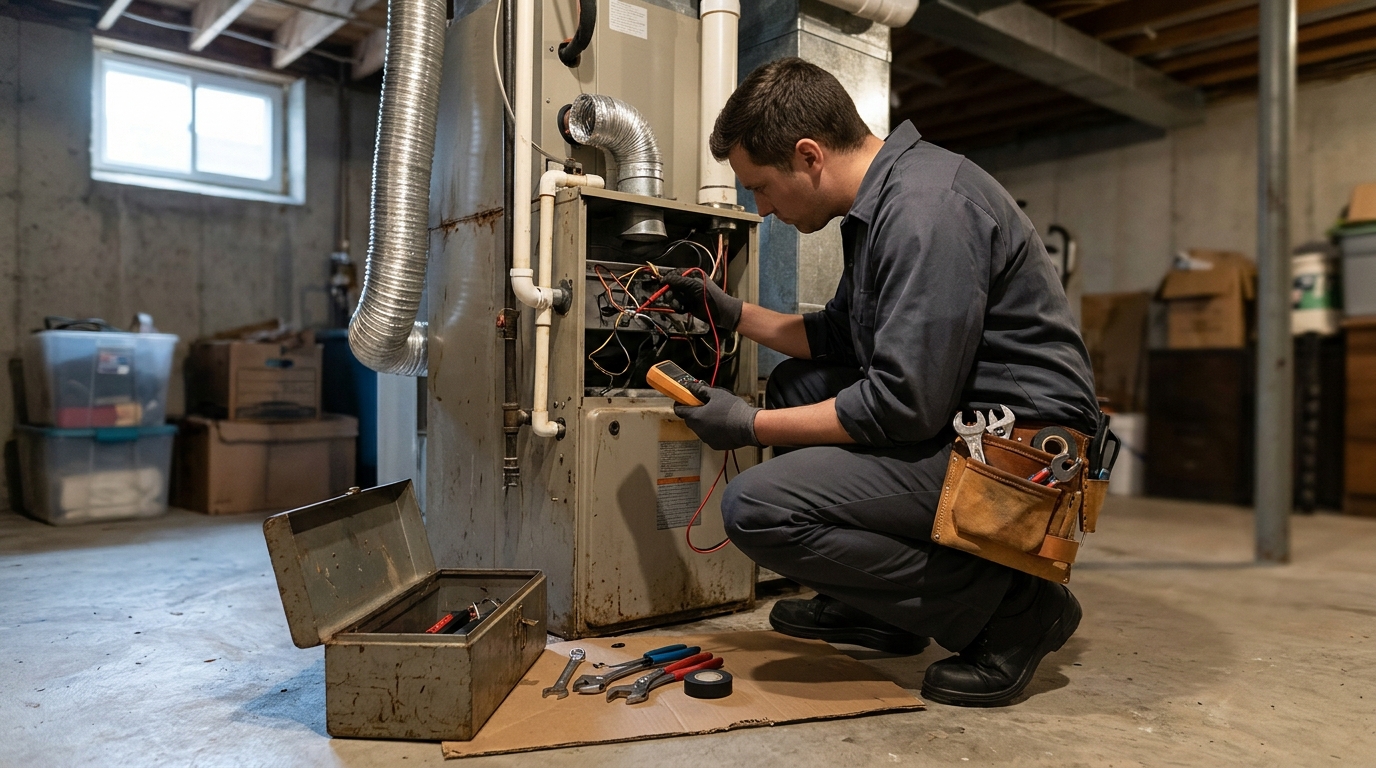
HVAC Technician: Job Description, Salary and How to Qualify
An HVAC technician installs, services and repairs heating, ventilation, air conditioning and refrigeration systems — in homes, shops, offices, factories and cold stores. ONET OnLine (U.S. Department of Labor, undated) lists reported job titles for the occupation including AC Mechanic, HVAC Installer, HVAC Mechanic, HVAC Service Tech and Refrigeration Technician, which tells you how wide the work can be.
10 min read
 Industries
A Career in Cybersecurity: What You Need to Know
Cybersecurity is not one job. It is a cluster of roles — monitoring and triaging alerts, investigating incidents, testing systems for weaknesses, writing policy, and producing threat intelligence — spread across government, finance, healthcare, retail, consultancies and specialist security firms.
11 min read
 Industries
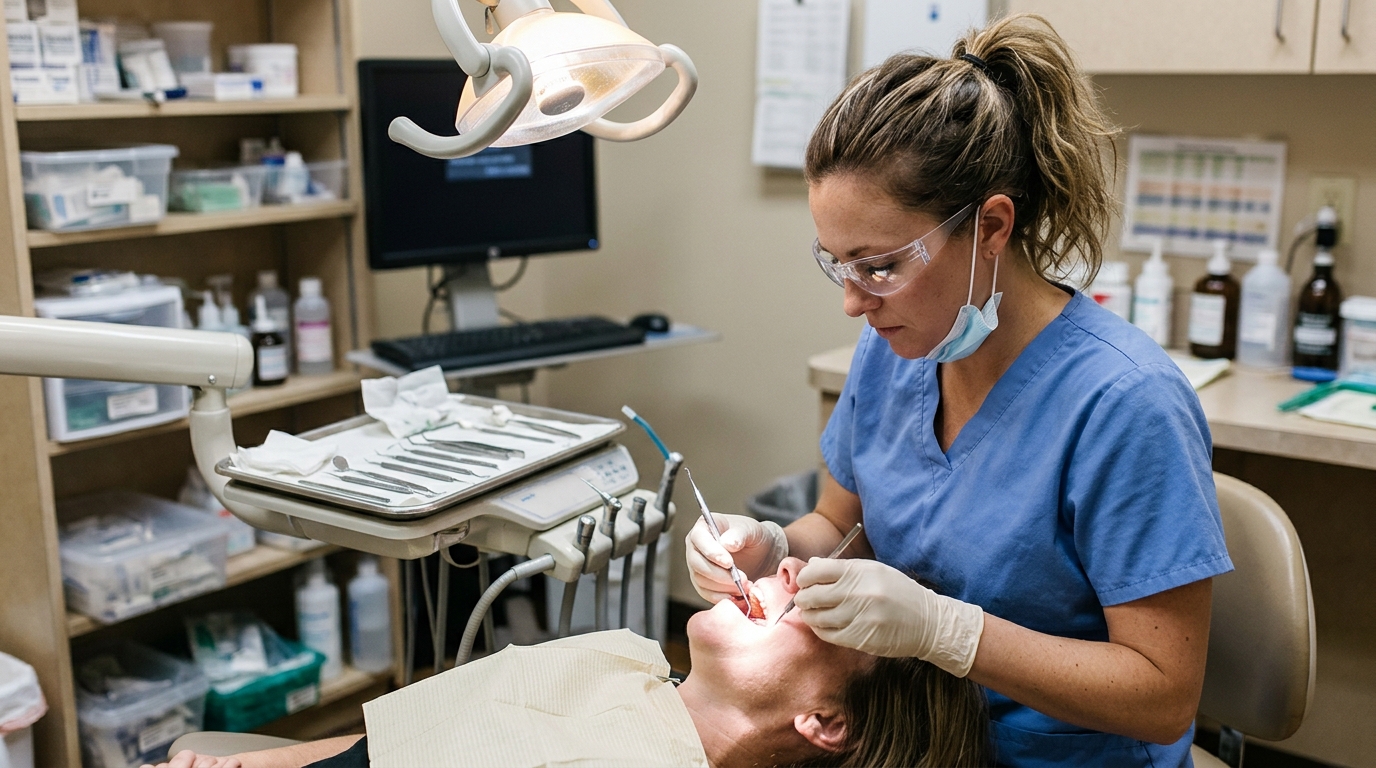
How to Become a Dental Hygienist
Dental hygienists clean, chart and protect patients' gums and teeth, usually working alongside dentists in general practice, hospital or community clinics. The work is hands-on: scaling, polishing, taking radiographs and coaching patients through what they do at home. Training is shorter than dentistry, but it is still a licensed clinical role with formal registration attached.
9 min read